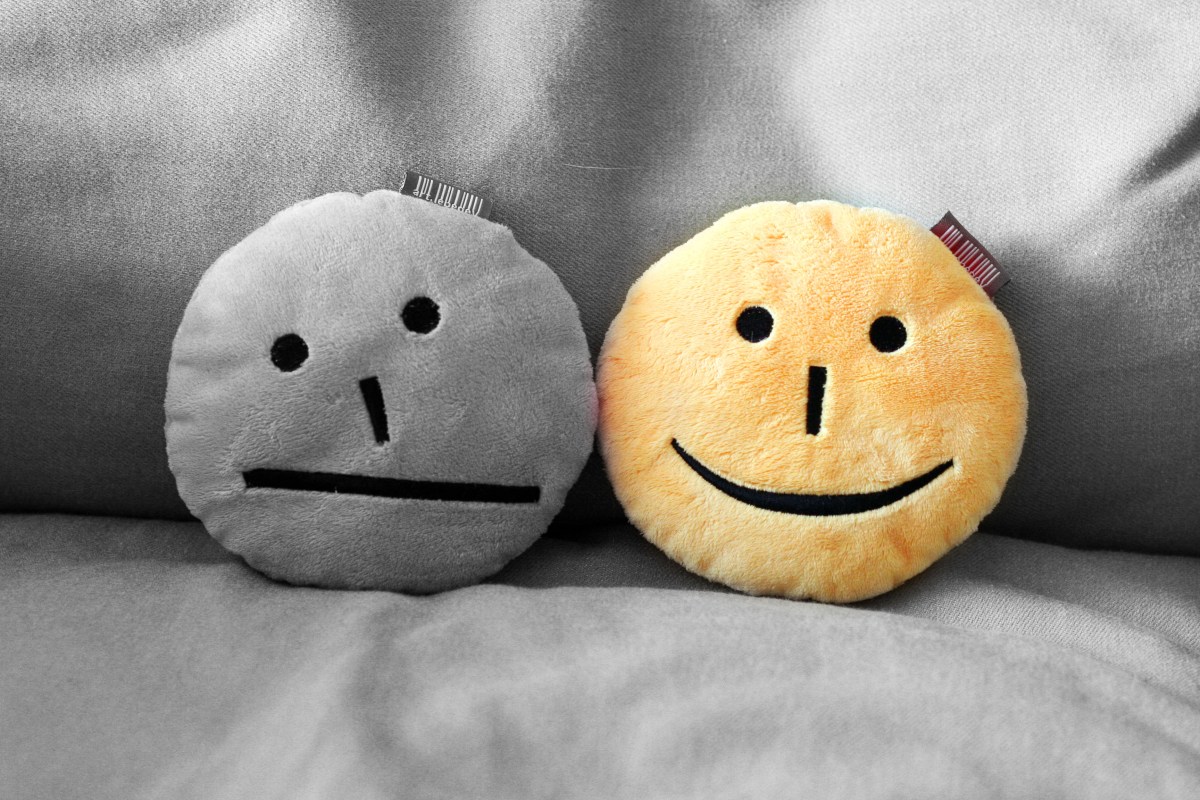
When Positivity becomes toxic.
Everyone is familiar with the terrible effects constant negativity can have on their mood and overall wellbeing. When you feel good about something, there is almost nothing more devastating than people bringing nothing but negative energy to the table. This can look like them pointing out how bad things are going for them instead or bringing your attention towards negative things happening in your own life, that you would rather not focus on right now. So, most people would agree that being positive, with yourself as well as with others, is a good thing in comparison. However, there can always be too much of a good thing, and that is also true for positivity. In fact, in some situations, positivity can be so far out of place, as to become toxic, something that is often referred to as Toxic Positivity. But how can positivity be toxic?
Imagine the following scenario: You have an important exam coming up, one in which you wish to get a high grade. Although you are fully aware of the amount of studying necessary to achieve this grade, you are somewhat distracted in the time leading up to it. In the end, you don’t study enough and don’t get that grade you wished for, even though you know you could have achieved if you had studied more! You are likely to be disappointed, maybe even a little bit angry at yourself. After all, you know you could have achieved your goal if you had put in a bit more effort. When talking with your friends about it, the second you show anger you are hit with “Oh, come on, don’t be angry, everything is going to be fine” – and the topic is not discussed any further. While you are aware of the good intention behind this sentence, you also don’t feel as if your emotions are being validated – and this is exactly where toxic positivity comes in. Toxic Positivity is the act of constantly portraying a positive outlook, dismissing, or invalidating authentic emotional experiences (Sokal, Trudel, & Babb, 2020). Especially in the current age, we are encouraged to keep an always positive outlook on life. However, bad things do happen, and they do commonly evoke negative emotions, such as anger, sadness, or disappointment. While those aren’t nice emotions, they are part of a healthy emotional life, and for continued psychological wellbeing it is important to engage with all your emotions, even the negative ones. This is also what several mental health professionals encourage their patients to do: rather than ignoring negative thoughts, it is essential to work on them and use them to understand yourself better. In the end, even our negative emotions are important tools that help us understand our wishes and aspirations in life (such as giving you the information, that getting that good grade was important to you).
Now, this is not to say that positivity per se is toxic, quite the contrary! Positivity is undeniably a valuable asset for mental well-being, but it is essential to apply it in a balanced manner. While reframing negative situations in a positive light certainly has its benefits, especially when circumstances are beyond our control (Passmore, Howell & Holder, 2018), it’s equally important to acknowledge and process the full spectrum of our emotions, including the negative ones (Ford, Lam, John, & Mauss, 2018). In fact, in certain contexts, having an overly positive outlook can be outright detrimental. For instance, unwarranted constant positivity has been linked to mania (Gruber, Johnson, Oveis, & Keltner, 2008), while reframing controllable negative situations as positive has been linked to increased inaction, which only leads to an increase in negative emotions over time (Troy, Shallcross, & Mauss, 2013). The dangers of excessive positivity become particularly pronounced when dealing with emotions triggered by discrimination. Just imagine, advising a friend who has faced job discrimination due to their sexual orientation to “look on the bright side”. Not only is that wildly insensitive (and might cost you a friend) but if adopted by the person themselves it can lead to the acceptance of discrimination. In fact, in those situations, the negative emotions should be vocalized, in an attempt to change the situation and fight injustices (Perez & Soto, 2011). In professional settings, it is especially important to be careful with toxic positivity, as it can even serve as a form of gaslighting, invalidating the real emotional toll of unjust experiences (Cherry, 2023).
As mentioned before, the term Toxic Positivity has received quite the attention recently, however it is important to note that the term is not a proper psychological term (yet) but rather a more colloquially used expression for the aforementioned set of behaviors. It is also, not without its controversies, as several psychologists have emphasized the risk this concept has, to diminish the very much needed optimism for maintaining a balanced mindset (Sokal, Trudel, & Babb, 2020). The argument is that optimism and positivity, even when seemingly over the top, is essential in counteracting the human tendency towards overemphasizing the negative, the so-called “negativity bias”. Yet, this point of view derives mostly from the direction of positive psychology, a branch of psychology that has been called into question several times in the last decade, given its overemphasis on positivity and optimism, which many psychologists see as detrimental to the achieving of continued wellbeing (for a more detailed critique of positive psychology, see Power 2016).
So, in conclusion, is toxic positivity something to look out for? Even if it is not a proper psychologically defined phenomenon (yet), you should definitely be wary of people who are trying to invalidate your emotions, even if it seems to be in good faith. However, do not simply accept negative emotions either, always think about where the locus of those negative emotions lies! If it is something you can change (or at least call out), such as your own time spent studying, or the behavior of someone in your life, then your negative emotions should be ideally worked through and used as a motivator, rather than ignored.
References
Ford, B. Q., Lam, P., John, O. P., & Mauss, I. B. (2018). The psychological health benefits of accepting negative emotions and thoughts: Laboratory, diary, and longitudinal evidence. Journal of Personality and Social Psychology, 115(6), 1075–1092. https://doi.org/10.1037/pspp0000157
Cherry, Kendra (2023). Toxic Positivity—Why It’s Harmful and What to Say Instead. https://www.verywellmind.com/what-is-toxic-positivity-5093958 (last accessed on 30/10/2023)
Gruber J, Johnson SL, Oveis C, Keltner D. (2008) Risk for mania and positive emotional responding: too much of a good thing? Emotion. 8(1):23-33. doi: 10.1037/1528-3542.8.1.23
Passmore, HA., Howell, A.J. & Holder, M.D. (2018). Positioning Implicit Theories of Well-Being Within a Positivity Framework. Journal of Happiness Studies 19, 2445–2463. https://doi.org/10.1007/s10902-017-9934-2
Perez, C. R., & Soto, J. A. (2011). Cognitive reappraisal in the context of oppression: Implications for psychological functioning. Emotion, 11(3), 675–680. https://doi.org/10.1037/a0021254
Power, Mick (2016). Understanding Happiness: A critical reciew of positive psychology. New York: Routledge.
Sokal, Laura, Lesley Eblie Trudel, and Jeff Babb. (2020) “It’s okay to be okay too. Why calling out teachers’ “toxic positivity” may backfire.” EdCan 60(3).
Troy AS, Shallcross AJ, Mauss IB. (2013) A person-by-situation approach to emotion regulation: cognitive reappraisal can either help or hurt, depending on the context. Psychological Science 24(12):2505-14. doi: 10.1177/0956797613496434.
 B.BIAS