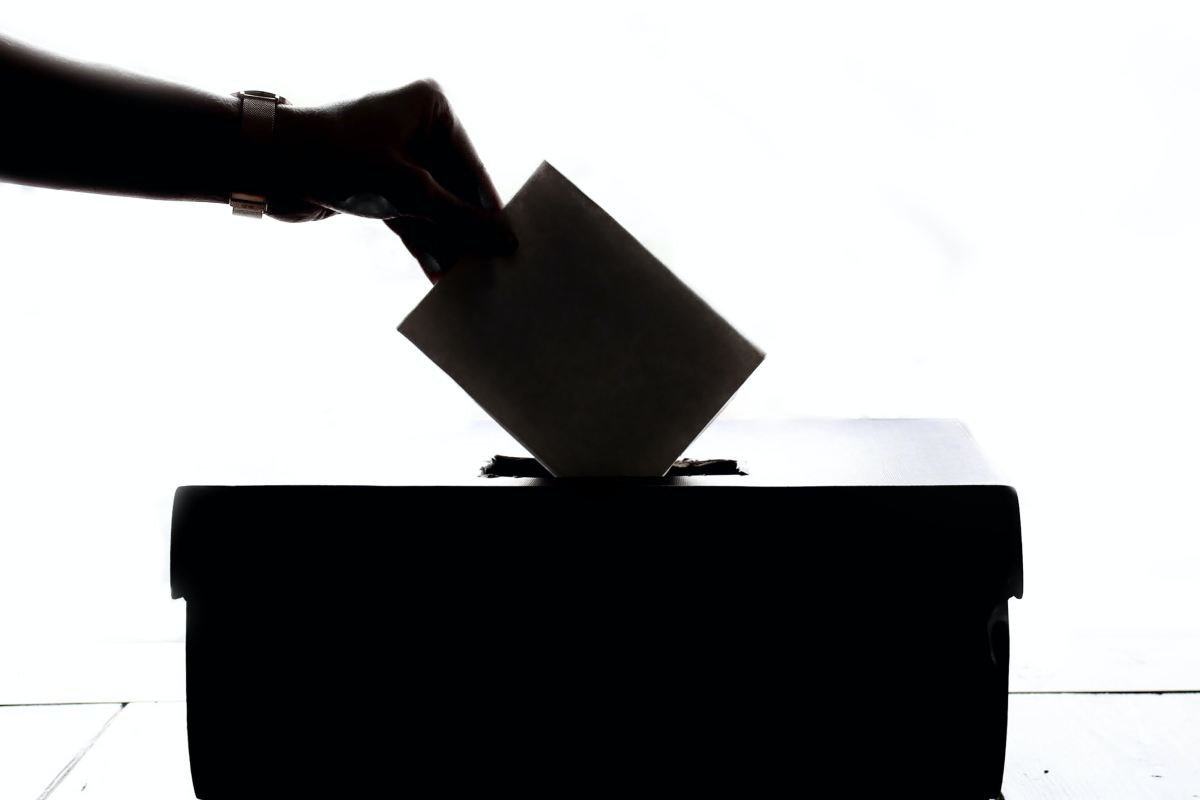
The stories of corruption within democracies have millennia-old origins; just think of the Verrines or the trial against Catiline, cases that changed the sensibilities of the time regarding the morality underlying politics. The gradual expansion of suffrage, up to its universality, are recent and significant steps that have changed the needs of democratic countries. A free, secret, and equal vote has become the guarantee of the legitimacy of the state itself, and ensuring it has become a state duty. But is it possible that there are cases in which individual voters can be influenced in such a way as to change their voting intentions, undermining the very freedom of choice at the core of the democratic system?
Several modern cases, such as the Tangentopoli scandal, and various pieces of evidence regarding vote buying – the phenomenon that occurs when election contestants (political parties or candidates) offer money, material goods, or services to voters in exchange for their votes – demonstrate that the danger is particularly high, especially in less advanced democracies.
Joseph and Vashchanka (2022) highlight in their report on vote buying that it is significantly relevant in countries such as Bulgaria, Indonesia, Kenya, and the Philippines, where a third of voters reported receiving offers in exchange for voting for a specific candidate. The phenomenon is also widespread in the Dominican Republic, Sierra Leone, and Argentina, where up to a quarter of voters report experiencing the same practice. Vote buying disproportionately affects vulnerable and marginalized social groups, impacting post-election political agendas as elected officials pay less attention to the categories from whom they bought votes, perpetuating inequalities.
This article analyzes various perspectives on the causes and motivations that lead certain democracies and individual candidates to resort to vote buying, the measures that a democracy can adopt to limit the phenomenon, being aware of the mechanism behind it, and the consequences on the democratic culture of a country.
Firstly, the phenomenon under consideration has a much broader scope than one might imagine based on available data. It is challenging to accurately grasp the extent of vote buying through surveys, which remain the only method to determine if there has been an attempt at corruption. Gonzales-Ocanto, de Jonge et al. (2012) argue, based on evidence from their empirical work in Nicaragua, that officially detecting vote exchange is difficult due to social desirability bias. This bias leads respondents to lie to appear more honest to the interviewer, even in anonymous surveys. This poses a challenge for institutions overseeing the electoral process not only in suppressing the phenomenon but also in identifying it.
There are various practices classified as vote buying, and the mechanisms set in motion by voters can differ based on the approach or the presence of intermediaries. Several hypotheses have been put forward regarding the motivations that might drive voters to sacrifice their preferences for a certain candidate, considering that voting is free and secret.
Halida, Susiato et al. (2022) propose an interesting thesis on the functioning of the vote-selling mechanism by those who decide to participate in it. Researchers divide vote-selling into two parts: the first involves offering money to voters, and the second occurs when voters must indicate their preference on the ballot. Although they couldn’t determine if candidate quality moderates the effect during the second phase, the acceptance of money represents a crucial step where individuals decide whether to comply with the intentions of those attempting to corrupt them. Those who accept compensation have made a choice driven by weak self-control, placing them in a cycle where it is highly likely they will vote for the corrupt candidate. This is where the mechanism hypothesized by Finan and Schechter (2012) comes into play, suggesting that reciprocal bias, the willingness to sacrifice personal well-being for those who have offered material goods, may underlie vote buying. If done through the right intermediaries among vulnerable social classes, the phenomenon could spread widely.
The role of intermediaries is crucial for politicians to identify individuals with “reciprocity”. This could happen for various reasons: the simplest explanation could be that politicians target, through intermediaries, reciprocal individuals to secure their votes; an alternative could be that politicians know those who vote for their party, and compensation helps them overcome the disutility of going to the polls, while another interesting hypothesis suggests that intermediation serves to facilitate cooperation between politician and voter if individuals believe the vote is not secret or to nurture a long-term relationship between the two actors, again emphasizing the lack of secrecy.
It is clear, therefore, that some institutional elements favour the practice. In particular, the lack of protection for the secrecy of the vote and the absence of law enforcement, a structure suitable for combating corruption, are factors that make vote buying more effective (Joseph and Vashchanka, 2022).
Addressing vote buying requires, first and foremost, legislative reforms to protect the vote and clearly define practices identifiable as vote buying. Electoral system reforms to introduce closed lists, minimising competition within parties, are necessary. Reforms in election management are also crucial; in some countries, ballots are different for each candidate, and in others, candidates can even print and distribute personalized ballots. Concentrating the vote on a single ballot is necessary to ensure vote secrecy. Additionally, increasing security measures during voting and counting, and checks on election administration, are necessary to prevent further fraud. Another key point for limiting the phenomenon is monitoring the transparency of campaign financing. Knowing the exact amount of funds available to a candidate allows understanding of how these funds are spent, discouraging the possibility of buying votes with those funds. Finally, raising awareness among the population about the phenomenon is crucial to improve citizens’ awareness during the decision-making process when presented with the opportunity to participate in the vote-buying mechanism, blocking the candidate selection process at the priming phase.
Reducing corruption during voting and ensuring its security is crucial for maintaining a vibrant democratic culture. Stockemer, LaMontagne et al. (2013) argue that corruption practices not only slow economic and social development but also hinder the functioning of democracy itself. According to their work, citizens in democracies with higher levels of corruption are more likely to disengage from politics, choosing not to vote. One perspective proposed by researchers is that citizens in countries with higher corruption levels may develop resentment towards normal political channels, opting for radical actions.
Bibliography:
Finan, F., & Schechter, L. (2012). Vote-Buying and Reciprocity. Econometrica, 80(2), 863–881. https://doi.org/10.3982/ECTA9035
Gonzalez-Ocantos, E., de Jonge, C. K., Meléndez, C., Osorio, J., & Nickerson, D. W. (2012). Vote Buying and Social Desirability Bias: Experimental Evidence from Nicaragua. American Journal of Political Science, 56(1), 202–217. https://doi.org/10.1111/J.1540-5907.2011.00540.X
Halida, R., Susianto, H., Mujani, S., & Pratama, A. J. (2022). Vote-Selling as Unethical Behavior: Effects of Voter’s Inhibitory Self-Control, Decision Toward Vote-Buying Money, and Candidate’s Quality in Indonesia Election. Journal of Social and Political Psychology, 10(2), 570–587. https://doi.org/10.5964/JSPP.5643
Joseph, O., & Vashchanka, V. (2022). Vote Buying: International IDEA Electoral Processes Primer 2. Vote Buying: International IDEA Electoral Processes Primer 2. https://doi.org/10.31752/IDEA.2022.61
Stockemer, D., LaMontagne, B., & Scruggs, L. (2013). Bribes and ballots: The impact of corruption on voter turnout in democracies. International Political Science Review, 34(1), 74–90.
 B.BIAS
One reply on “Vote Buying: Unraveling Challenges and Urgency for a Robust Democratic Ethos”
[…] Vote Buying: Unraveling Challenges and Urgency for a Robust Democratic Ethos […]
LikeLike