Have you ever made a successful trade and thought to yourself, “Yeah I knew it, I’m so great, I should start a hedge fund!”? When a couple wins in the stock market it feels like you’re ready to challenge Warren Buffett? There’s nothing wrong with being right a couple of times and winning certainly boosts our self-esteem, but inevitably, there comes a time when the market reminds us that we are neither infallible nor omniscient. We’ve fallen victim to hubris, as the Greeks would say, or overconfidence. Overconfidence refers to the excessive trust in one’s abilities, often resulting from errors in estimating probabilities. Excessive self-confidence could be also the result of a complex combination of neurological factors influencing risk perception, the reward system, cognitive biases, and decision-making processes.
Understanding overconfidence involves System 1 and System 2 thinking, as described by Kahneman. System 1 is fast, intuitive, and biased, relying on quick judgments based on emotions and impressions. It can lead to overconfidence by favoring easy information over complexities. In contrast, System 2 is slow, analytical, and cautious, relying on deliberate reasoning and effort. Despite its advantages, people often default to System 1 due to its efficiency and cognitive shortcuts, especially in uncertain situations. Biases like the availability heuristic further contribute to overconfidence by promoting quick, emotionally driven responses over careful analysis.
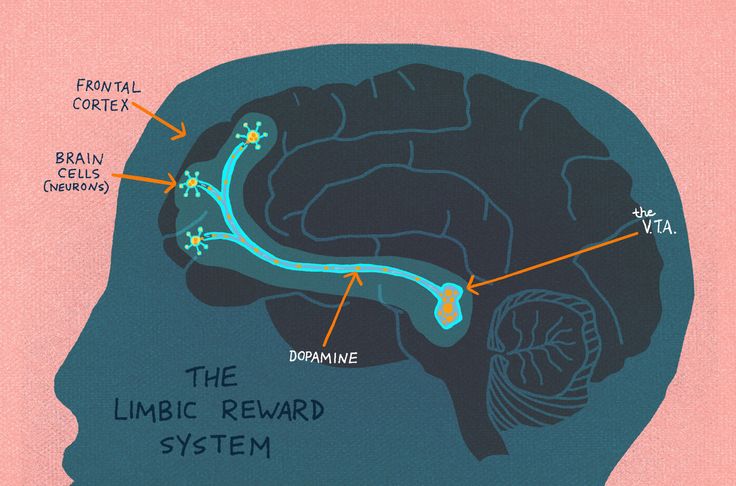
From a neurological perspective, overconfidence can be attributed to interactions within specific brain systems, particularly the limbic system and the brain’s reward circuitry. The limbic system, including the amygdala, plays a key role in processing emotions and responses to risky or uncertain situations. Excessive confidence may result from reduced amygdala activation in response to danger or uncertainty signals, leading to a diminished perception of risk. Meanwhile, the brain’s reward system, influenced by dopamine pathways, also contributes to overconfidence. Dopamine, a neurotransmitter associated with pleasure and reward, is released during successful experiences or goal achievement. Increased dopamine levels can create an illusion of excessive control over one’s abilities, fostering overconfidence in decision-making. Success triggers dopamine release and positive emotional responses from the amygdala, reinforcing feelings of confidence. However, excessive reliance on these feelings can lead to addiction-like behavior, especially in dynamic environments like financial markets.
Robert Shiller’s 2001 paper titled “Bubbles, Human Judgment, and Expert Opinion” explores the concept of overconfidence as a form of representativeness heuristic. Shiller argues that speculative bubbles and irrational market valuations can be partly explained by the overconfidence of market participants. In other words, investors often overestimate their forecasting abilities and underestimate market uncertainty. Representativeness refers to how people tend to make judgments based on analogies and similarities between events. This heuristic can lead to irrational decisions when investors perceive patterns or correlations that may not actually exist. From a financial perspective, Shiller’s insights highlight the impact of psychological biases on market behavior and asset pricing. These cognitive biases can contribute to market inefficiencies, leading to mispricings and speculative bubbles driven by investor sentiment rather than fundamental value.
A well known example of overconfidence is the dot-com bubble. During the late 1990s and early 2000s investors displayed excessive optimism and overestimated their ability to predict future outcomes in the rapidly growing technology sector. Fueled by the rise of the internet, companies with “.com” names or involved in online ventures experienced soaring stock prices driven by speculation. Traditional business metrics were often overlooked in favor of optimism about digital innovation. Start-ups with little revenue attracted substantial investment based on perceived potential rather than financial performance. The bubble peaked in early 2000 but burst when investors questioned valuations and business models, leading to significant market corrections, bankruptcies, and losses. This episode highlighted the dangers of speculative excess and overconfidence in financial markets.
So, how can we avoid this? Creating a resilient portfolio requires strategies to counteract these tendencies and to manage risk effectively. Rule number one: diversify! A well-diversified portfolio is essential to reduce concentration risk and reliance on specific assets or sectors. By spreading investments across different asset classes, industries, and geographical regions, diversification helps mitigate individual stock volatility and sector-specific risks. It acknowledges the inherent uncertainty in financial markets. For example, if you are confident in the growth potential of a specific sector like cryptocurrencies, consider balancing your portfolio with less volatile assets. This could include established blue chip companies, ETFs, index funds that replicate broad market indices or you might combine investments in high-growth technology stocks with positions in stable, dividend-paying companies. Moreover, if you are heavily invested in some particular geographical areas such as emerging countries, diversify by adding ETFs that cover other major markets like the US or European Union. This reduces overall risk exposure to any single region’s economic conditions or geopolitical events. Regularly reviewing and rebalancing your portfolio is equally important. This involves adjusting asset allocations to maintain target weights, preventing portfolio drift and excessive exposure to high-risk assets that can result from overconfidence or market euphoria.
Bibliography:
- Shiller, Robert J.. Irrational Exuberance, Princeton: Princeton University Press, 2016.
- Akerlof, George A. and Shiller, Robert J.. Animal Spirits: How Human Psychology Drives the Economy, and Why It Matters for Global Capitalism, Princeton: Princeton University Press, 2010.
- Kahneman, D. (2011). Thinking, fast and slow. Farrar, Straus and Giroux.
 B.BIAS