How to Invent a New Relationship with Work by Daniel Goleman – Book Review by Alice Romaniello
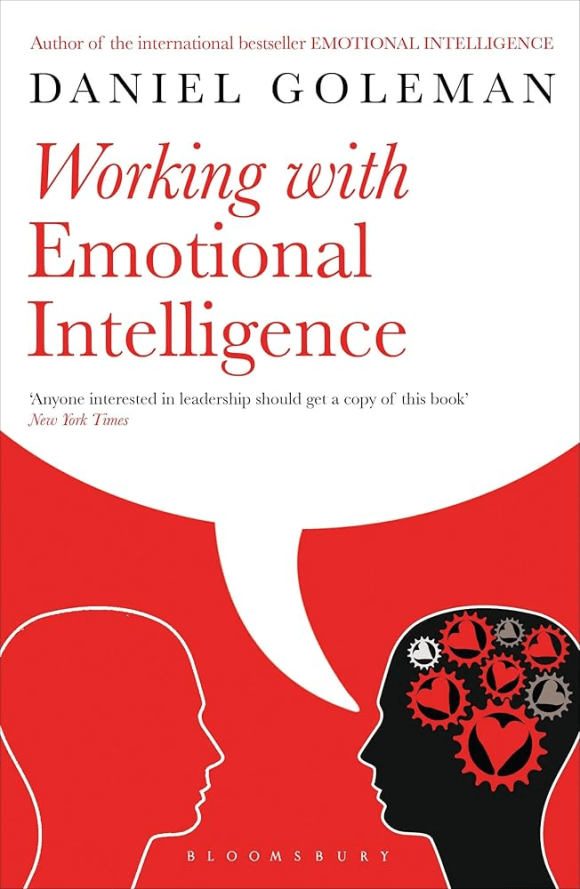
Working with Emotional Intelligence is an essay by Daniel Goleman, psychologist and science journalist, that explores the role of emotional intelligence in the workplace. Published as a follow-up to his bestseller Emotional Intelligence, the book starts from the assumption that the rules of work have changed today and that emotional and social skills are more crucial for professional success than mere technical abilities or the knowledge acquired at school, or the IQ. This is “that false concept, yet widely accepted, according to which, for success, what really matters is only intellect” (1).
According to the author, today we are judged not only by how intelligent, capable, or high-performing we are but also by how we behave toward ourselves and relate to others, aspects that determine the likelihood of excelling or, conversely, facing continuous failures. He writes: “Considering the importance placed on it by schools and admission tests, IQ by itself accounts for a surprisingly limited part of an individual’s actual performance at work and in life. When there is a correlation between IQ scores and career success, it has been estimated that IQ accounts for at most 25% of the performance difference” (2).
It is a powerful metric that has little to do with academic success but rather relates to personal qualities such as initiative, empathy, resilience, flexibility, persuasion, and, in short, emotional intelligence. The term emotional intelligence used by Goleman refers to the “ability to recognize our own feelings and those of others, to motivate ourselves, and to manage our emotions positively, both internally and in social relationships” (3).
It describes skills that, although complementary since they express different parts of the brain, are distinct from academic intelligence, measured by IQ. Intellect, in fact, is based on processes that occur at the surface layers of the brain, i.e., in the neocortex, the “thinking” brain; emotional centers, in particular the amygdala, are located deeper, in the subcortical regions. Emotional intelligence occurs when these two centers function in an integrated way, as neuroscience now agrees that thought and feelings are inextricably intertwined. From here arises an important consideration: tuning in with our feelings provides us with critical information to guide us in life.
This is not a new concept, as Gardner had already included it in 1983 within the model of “multiple intelligences,” in terms of knowledge of one’s inner world and dexterity, and Salovey and Mayer, two psychologists from the University of New Hampshire, defined it in 1990 as the ability to monitor and control one’s own and others’ emotions and to use them to guide thought and action. Goleman has adapted these theories into a model that helps us understand how these emotional talents prove to be important in work life, especially today, as we live in an increasingly fast-paced, competitive, and interconnected world where personal and professional success depends not only on our technical skills but also on our ability to understand, manage, and express emotions effectively.
Emotional Intelligence: An Innate or Learned Ability?
The extraordinary news is that these abilities can be learned and enhanced throughout life.
Unlike the idea that emotional abilities are natural, Goleman highlights how emotional intelligence can be increased and refined through study and practice. He states, “Unlike IQ, which undergoes few changes once adolescence is over, emotional intelligence seems largely learned and continues to develop throughout life as we learn from experience” (4).
He also adds, “Our nervous system is automatically predisposed to engage in this emotional empathy (here, the amygdala plays the key role). But our ability to use this capacity is largely learned, and it also depends on motivation. Animals—and humans—raised in a state of extreme social isolation cannot read the emotional cues of others not because they lack the fundamental circuits of empathy, but because, having had no role models in the emotional domain, they have never learned to pay attention to those messages and therefore have never practiced that ability” (5).
Emotional learning requires profound neurological changes, so it is necessary to find effective ways to teach emotional skills.
How it is structured
The book is the result of studies and experiments conducted over two years, involving thousands of people from various professions. In all the sectors analyzed, it was observed that the ability to excel, particularly in leadership, largely depends on possessing these specific skills—a different way of being intelligent.
It is divided into 5 Parts and 13 Chapters:
Part One: BEYOND EXPERTISE – Emotional intelligence matters more than IQ or expertise in determining who excels at work.
Part Two: SELF-MASTERY – The specific abilities for excellent performance are 12 (initiative, reliability, self-confidence, drive for achievement and success, etc.).
Part Three: SOCIAL SKILLS – The fundamental skills for relationships are 13 (empathy, political awareness, making use of diversity, teamwork skills, leadership, etc.).
Part Four: A NEW LEARNING MODEL – Regardless of which skills one is weakest in, it’s always possible to learn to improve.
Part Five: THE EMOTIONALLY INTELLIGENT ORGANIZATION – Even an organization can and should be emotionally intelligent.
In particular, the book highlights five key areas of emotional intelligence applied to work:
- Self-awareness – Recognizing your own emotions and understanding how they affect your performance.
- Self-management – Managing stress and emotions productively.
- Motivation – Pushing beyond goals with passion and determination.
- Empathy – Understanding and responding to the feelings of others.
- Social skills – Communicating effectively and building strong relationships.
The abilities related to these areas are vital for learning the professional skills necessary for success in the workplace.
Every chapter of the book contains numerous scientific arguments supporting the importance of emotional intelligence in the workplace for individuals, groups, and organizations, and offers practical tools for cultivating and strengthening it. Through concrete examples, tested strategies, and guided reflections, readers learn to recognize their own emotions and those of others, manage stress, improve leadership skills, and build more authentic and fulfilling relationships.
Key Points of the Book
The old way of doing business no longer works; the competitive challenges of the global economy push everyone to adapt in order to thrive under new rules. In the past, company hierarchies separated labor from management, and salaries were determined by skills. Today, these structures are evolving into networks without fixed rules, and as the business world changes, so do the qualities necessary to remain competitive. Goleman offers insights to help understand that all these changes increase the value of emotional intelligence and supports his arguments with scientific research, concrete examples, and business cases, showing how the most effective leaders are not necessarily those with the best technical background, but those who can manage relationships, motivate teams, and make mindful decisions.
Strengths
- The book is rich in practical examples and scientific studies that clearly demonstrate the link between emotional intelligence and professional success.
- It offers concrete tools to develop emotional skills and improve work performance.
- The language is accessible, even for those with no background in psychology.
Possible Limitations
- Some concepts may seem repetitive, especially for those who have already read Emotional Intelligence.
- The approach is more theoretical than practical: those seeking a hands-on guide may desire more exercises and concrete strategies.
Conclusion
In conclusion, Goleman’s Working with Emotional Intelligence is more than just a book—it’s a roadmap to unlocking personal and professional potential. By shifting the focus from IQ to emotional intelligence, Goleman challenges traditional views of success, proving that self-awareness, empathy, and communication are the real game changers. His insights continue to shape leadership, workplace dynamics, and personal growth, making this book a must-read for anyone looking to thrive in an increasingly interconnected world. Whether you’re a leader, a professional, or simply someone eager to grow, mastering emotional intelligence can transform the way you connect, collaborate, and lead.
References
Goleman, Daniel. Working with Emotional Intelligence. BUR, 1998, p. 15.
- Goleman, Daniel. Working with Emotional Intelligence. BUR, 1998, p. 15.
- Ibid., p. 33.
- Ibid., p. 375.
- Ibid., p. 18.
- Ibid., p. 167.
- Ibid., p. 42.

 B.BIAS